
A moment to slow down
Mindful Breathing.
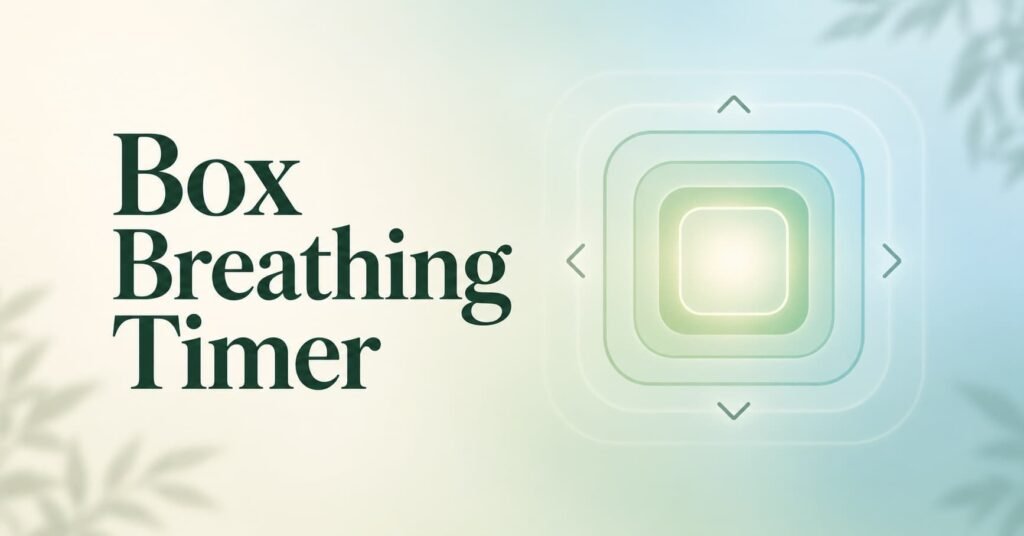
Follow the circle. Let it guide your breath a little slower than usual. A minute or two is enough to feel the difference.
Press start when you're ready.
A gentle relaxation practice, not medical treatment. If you feel dizzy or uncomfortable, return to normal breathing. If you have a heart or respiratory condition, or feel unwell, check with a health professional first.
Mindful breathing means slowing and steadying your breath on purpose to calm your body and mind. This free guided timer paces your breathing — including box breathing and the 4-7-8 pattern — so you can settle in a few minutes, with nothing to download.
Slow breathing of about six breaths per minute can shift the body toward the parasympathetic “rest and digest” state, easing the stress response.
HowTo — box breathing
1. Breathe in through your nose for 4 seconds.
2. Hold your breath for 4 seconds.
3. Breathe out slowly for 4 seconds.
4. Hold for 4 seconds, then repeat for 4–5 rounds.
What is box breathing?
A simple technique of equal four-second counts — inhale, hold, exhale, hold — used to calm the nervous system quickly.
How does breathing reduce stress?
Slow, steady breathing signals the body to relax, lowering heart rate and easing the fight-or-flight response.
How long should I do a breathing exercise?
Even one to three minutes helps. Use it whenever you feel tense, or build it into a daily wind-down.
Check some excellent wellness tools: Stress Check (strong — stressed visitors want relief), Mood Check-In, Sleep Quality Score.